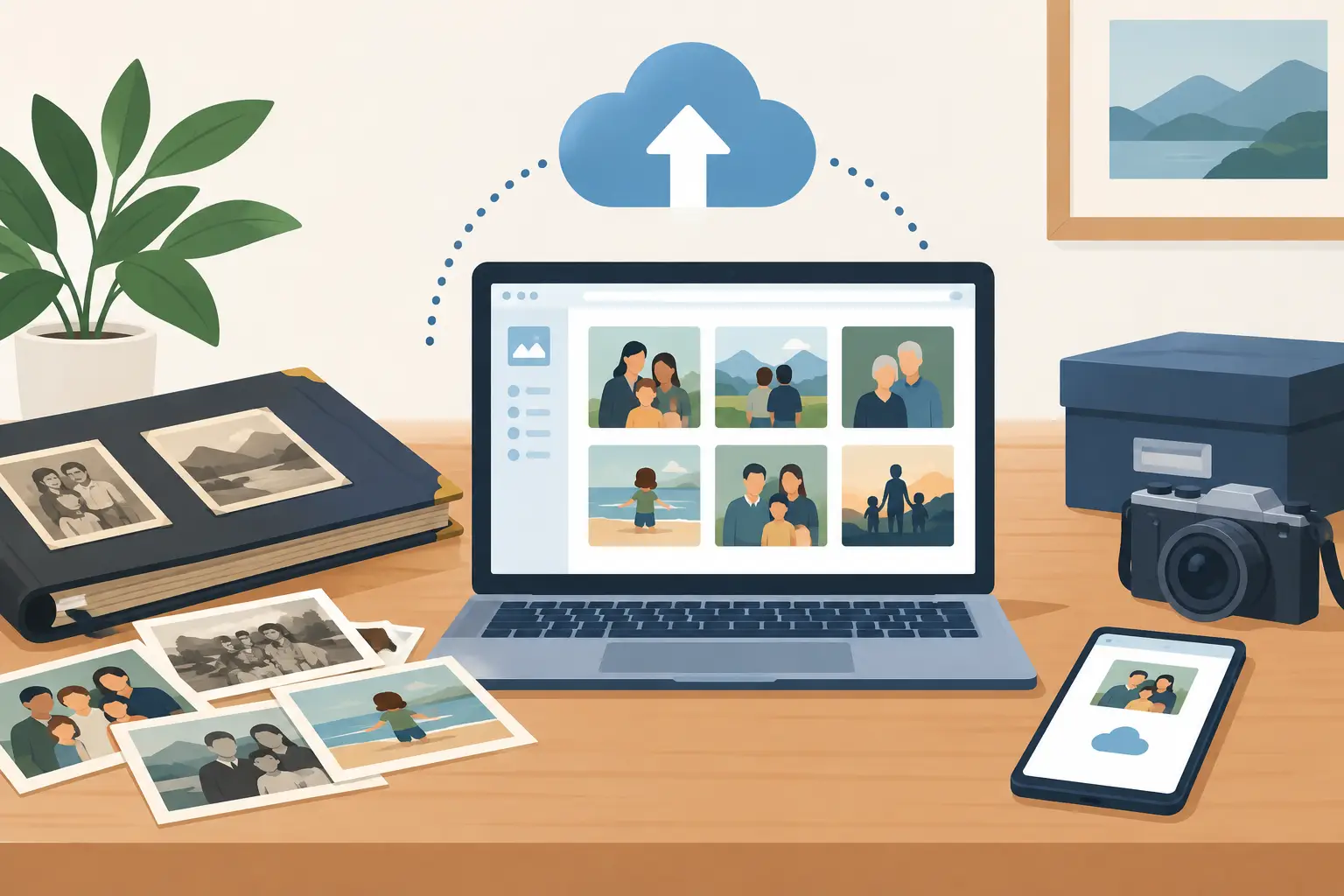
A handwritten recipe can tell you who made it. A voice recording can tell you how they laughed while making it. That difference matters when you are deciding how to preserve family stories digitally. The goal is not simply to save more files. It is to keep the details, voices, and meaning that help a family recognize itself years from now.
Family stories are often lost quietly. They stay in someone’s memory until there is no time to ask. They sit in an old phone, a social media account, or a folder with a name no one understands. A simple, intentional approach gives those memories a better chance of reaching the people who will value them.
Start With the Stories Only Your Family Can Tell
Do not wait for a major family reunion or a perfect recording setup. Begin with one person and one specific memory. Broad questions such as “Tell me about your life” can feel overwhelming. A focused question usually opens the door more easily.
Ask about the first home they remember, the meal their parent made when money was tight, or the job that changed their plans. Ask what their neighborhood sounded like as a child. Ask how they met their spouse, what they were most afraid of before becoming a parent, or which family saying they still repeat.
The most meaningful stories are not always the milestone stories. A grandparent explaining why they kept a particular coffee mug may reveal more about daily life than a formal account of their career. Record both the big moments and the ordinary ones. Together, they create a fuller picture of a person.
Use prompts that invite detail
Good prompts make room for personality. Instead of asking whether someone enjoyed school, ask, “Who was the teacher you still remember, and why?” Instead of asking where they grew up, ask, “What did you do on a summer evening when you were ten?”
If the person is hesitant, share a memory of your own first. Conversation often feels more natural than an interview. Let pauses happen. A story may arrive after a few quiet seconds, especially when the memory carries grief, pride, or humor.
Choose the Right Digital Format for Each Memory
Written stories, audio recordings, videos, photographs, and scanned documents each preserve something different. There is no single best format. It depends on what you want a future family member to feel and understand.
A written note works well for a clear lesson, a favorite recipe, a family tradition, or a message that someone may want to read privately. Audio is especially valuable for preserving a voice, a phrase, a prayer, or a song. Video captures expression and presence, even when it is recorded on a phone in a quiet room.
Photos and documents need context. A scanned picture of three children on a porch becomes more valuable when someone explains who is in it, where it was taken, and what happened just before or after the camera clicked. Whenever possible, pair an image with a caption or a short voice note.
You do not need studio quality. A sincere three-minute video recorded near a window can matter far more than a polished project that never gets finished. Still, make a few practical choices: record in a quiet place, keep the phone steady, and test the sound before a longer conversation.
Organize Digital Family Stories So They Can Be Found
Saving files is only half the job. If no one can tell what a file contains, it may remain unseen even when it is safely stored. Use plain names that identify the person, the subject, and the date.
For example, “Grandpa_James_ArmyStories_2026-04-12” is more useful than “Video 184.” For photos, include names and locations when you know them. For a collection of recordings, create a short document that explains what is included and who should receive it.
A simple organization system may include folders for each person, major family branches, or life topics such as childhood, work, traditions, letters, and celebrations. Choose the system that your family can maintain. An elaborate archive is not helpful if it becomes too difficult to use.
Keep a master copy in a secure location and maintain a second copy elsewhere. This protects against a lost phone, damaged computer, or an account problem. Review your files periodically, especially after adding new material. Technology changes, and a file that works today may need to be moved or updated in the future.
Add the information a future reader will need
A future recipient may not recognize a face or understand an inside joke. Add names, dates, places, and relationships where possible. If a date is uncertain, say so rather than guessing. “Around 1968, likely in Tulsa” is still useful information.
Context can also include why the story was recorded. A note saying, “I asked Mom about this after she found the old quilt,” creates a bridge between the item and the moment it was shared. Small details make an archive easier to understand and more human to revisit.
Protect Privacy Before You Share
Family storytelling requires care. Not every story belongs in a broad family group, and not every recipient should receive the same message. Before recording or sharing, ask permission when a story involves another person’s private experience, health, finances, or conflict.
Think about who should have access now and who should have access later. A message for a child on their 18th birthday may not be right for a shared photo folder. A personal video for a spouse may need a different level of privacy than a history of the family farm.
Choose services and storage methods that use strong account protection. Use a unique password, keep recovery details current, and be careful about who can access your devices. It is also wise to tell a trusted person where important family records are stored, without sharing more access than necessary.
Security is not only about protecting files from strangers. It is also about making sure the right people can receive what you intended them to receive.
Make Digital Preservation an Act of Future Communication
Most cloud folders are built for storage, not for meaning. They hold files until someone thinks to search for them. Family stories often deserve a more intentional path.
Consider creating messages around dates that will matter: a graduation, wedding day, first child, retirement, or a future birthday. Record encouragement while it is fresh. Write down the story behind a family tradition before the next holiday. A message delivered at the right moment can feel less like an archive and more like a person reaching across time.
This is where a digital time capsule can be especially meaningful. MyTimeDrop securely sends written messages and videos to your future self or verified family recipients on a date you choose. Rather than leaving a loved one to sort through files, you can decide who should receive a message and when it should arrive.
That approach is not a replacement for keeping a well-organized family archive. It serves a different purpose. Your archive preserves a body of family history. A scheduled message preserves a specific connection, meant for a particular person and time.
Create a Small Routine That Lasts
The easiest way to preserve family stories is to make it a regular practice rather than a project you keep postponing. Set aside an hour on a birthday, holiday weekend, or quiet Sunday each month. Record one story, scan a few photos, label what you add, and make a secure backup.
Invite relatives to participate in ways that suit them. One person may be comfortable on video, while another would rather answer questions in writing. A teenager might enjoy editing clips or identifying people in old photos. Participation does not have to look the same across generations.
Start with what you have, even if it is incomplete. A single labeled photograph, a two-minute voicemail, or a note about a favorite tradition is a meaningful beginning. The stories your family will treasure most are rarely the ones that were perfectly produced. They are the ones that were saved with care and given a clear way to be found when they are needed.