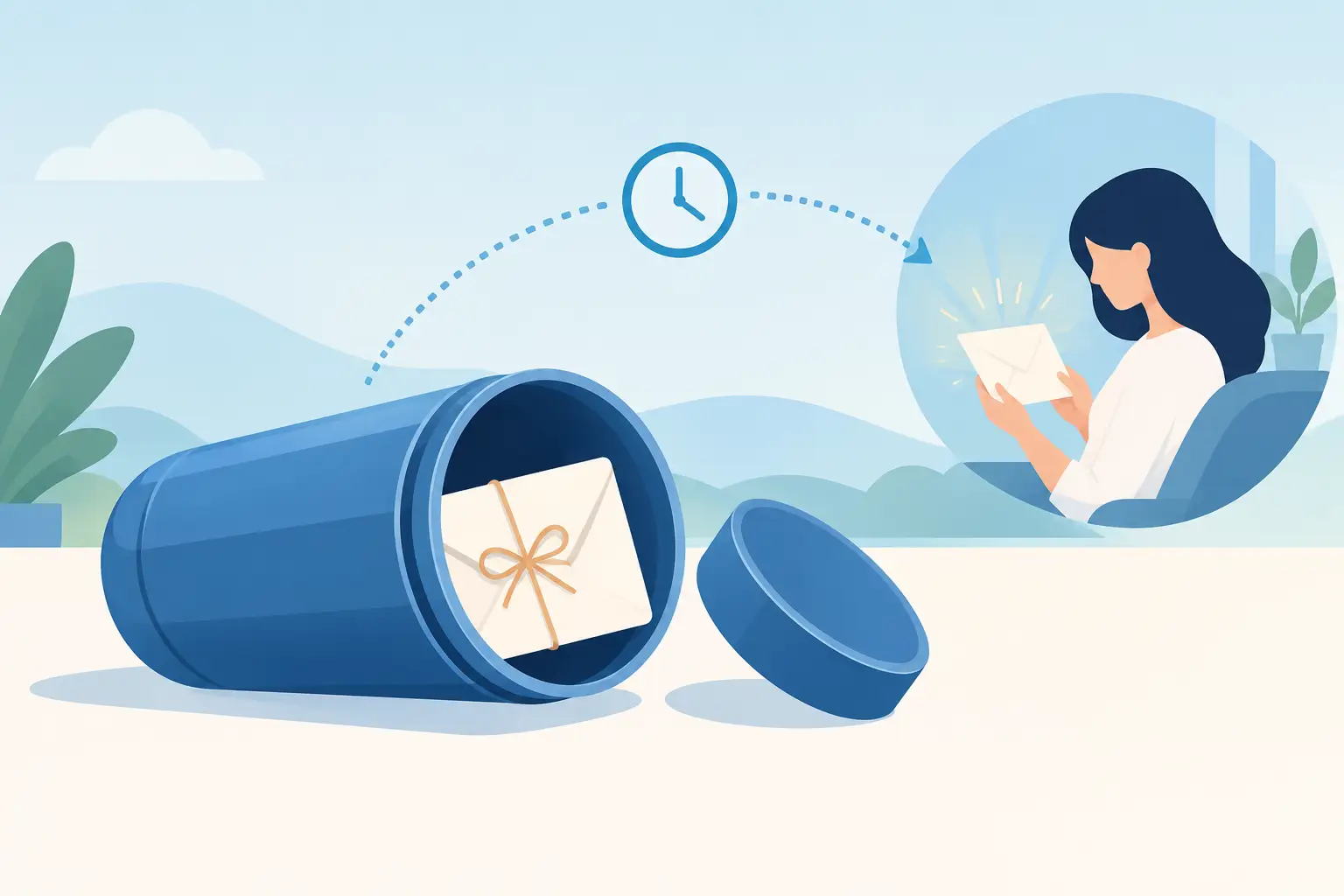
A birthday message should not get lost beneath grocery receipts and promotional emails. A video from a parent should not sit unnamed on an old phone until nobody remembers it is there. A digital time capsule gives a memory a destination: a specific person, a meaningful date, and a moment when it is meant to be received.
That difference matters. Saving a file preserves it, but scheduling a message turns it into an act of care. Whether you are writing to your future self, recording a note for a child, or sharing family stories with the people who will value them most, a time capsule helps make sure your words arrive with intention.
What a Digital Time Capsule Is
A digital time capsule is a private collection of written messages or videos that is prepared now and delivered later. Instead of asking someone to search through folders, devices, or cloud accounts, you choose when the message should be sent and who should receive it.
The concept is simple, but the purpose can be deeply personal. You might write a note on the day your child starts kindergarten and schedule it for their high school graduation. You might record a video for your spouse to open on a future anniversary. Or you may want to leave yourself a reminder of what you hoped for, worried about, and appreciated during a particular season of life.
A time capsule is not only for distant milestones. Some of the most meaningful messages are scheduled for next year, next month, or even a day when someone may need encouragement.
Why Timing Changes the Meaning of a Message
A photo library holds thousands of moments, yet most of us rarely revisit it with a clear purpose. An email inbox works the same way. Even a thoughtful message can disappear when it arrives alongside everyday demands.
Scheduled delivery creates a pause. It gives the recipient a reason to open the message and experience it as it was intended. A note sent on a 30th birthday, wedding anniversary, retirement date, or first day of college carries context that a file stored years earlier cannot provide on its own.
This is also why a digital time capsule can be more meaningful than a general backup. Backups are essential for protecting files, but they are built for storage and recovery. A time capsule is built for connection. It places the story, memory, or encouragement in front of the right person at a chosen time.
Meaningful Reasons to Create a Time Capsule
There is no single right occasion. The best reason is usually the one that feels worth saying before time moves on. Families often create capsules around milestones, but everyday life offers just as many opportunities.
Consider creating one for a child before a birthday, graduation, or first move away from home. Record the small details you do not want to forget: their favorite joke, what made them brave that year, or the way they changed your family. Those details may mean more later than a polished speech ever could.
For a spouse or partner, a future message can mark an anniversary, recognize a difficult season you made it through together, or simply say what is easy to assume but not always easy to say aloud. A video can be especially powerful because it preserves a familiar voice, expression, and presence.
A capsule for yourself has a different purpose. It can be a private checkpoint. Write about the decisions in front of you, the goals you are working toward, or the things you want your future self to remember. When that message returns, it may show you how much has changed and what has stayed true.
Family stories are another strong use. A grandparent can record memories of childhood, work, military service, immigration, traditions, or relatives younger family members never met. These stories do not need to be formal history lessons. The ordinary details are often what make them irreplaceable.
How to Make a Digital Time Capsule Feel Personal
The most lasting capsules are honest, not perfect. You do not need a script, professional lighting, or a long message. A few clear, specific thoughts are usually more powerful than trying to capture an entire life story in one sitting.
Start by thinking about what the recipient will need or appreciate when the delivery date arrives. If you are writing to a child, speak to the person they may be becoming, while grounding them in who they were at this moment. If you are writing to yourself, include enough context that you will remember the season: where you lived, what you were learning, what felt uncertain, and what brought you joy.
For video messages, choose a quiet place and speak naturally. Looking directly at the camera can make the recipient feel as though you are talking with them rather than performing for them. Short clips can be just as meaningful as longer recordings, especially when each one focuses on a single memory or message.
Specificity gives a capsule its emotional weight. Instead of writing, “I am proud of you,” try adding why: “I saw how patiently you kept practicing even when it was frustrating.” Rather than saying, “Remember our family,” share a detail: “Your great-grandmother always kept extra chairs at the table because she believed someone might need a place to sit.”
Choose Recipients and Dates Carefully
A scheduled message depends on accurate delivery details. Before finalizing a capsule, confirm the recipient’s email address and choose a date that makes sense for the message. If the platform offers family verification, use it. Verification helps connect your message to the intended family member rather than leaving delivery to an outdated or mistyped address.
It also helps to consider what happens if circumstances change. Email addresses can be replaced, family relationships can shift, and a date that seems right today may need adjustment later. Choose a service that allows you to manage your account and recipient information, then review important capsules occasionally.
When you are creating messages for more than one family member, think about whether each person should receive the same capsule or a version made just for them. A shared family memory can bring people together, while a personal note can acknowledge a relationship in a more direct way. Neither choice is better in every situation. It depends on the message and the people receiving it.
Privacy Is Part of the Promise
A time capsule often contains words and videos you would not post publicly. That is why privacy and account security should be part of the decision from the beginning, not an afterthought.
Use a unique, strong password for your account and keep your recovery information current. Be thoughtful about what you include in a message, particularly financial details, passwords, legal instructions, or sensitive information that should be handled through other appropriate channels. A digital time capsule is a meaningful place for personal communication, but it is not a replacement for estate planning, secure document storage, or professional advice.
MyTimeDrop is designed to securely send digital time capsules by email to your future self or up to five designated family members. Features such as Create Drop, Verify Family, and Join Family help make the process clear: create your message, confirm the people who matter, and schedule delivery for the date you choose.
A Message Worth Receiving Later
The hardest part is often beginning. People wait for the perfect milestone, the perfect words, or the perfect version of themselves to record. But the value of a time capsule comes from its truthfulness. It captures a real voice at a real point in time.
Write one note. Record one video. Choose one date that matters. Years from now, the person who opens it will not be looking for perfection. They will be grateful that you took the time to leave something meant especially for them.