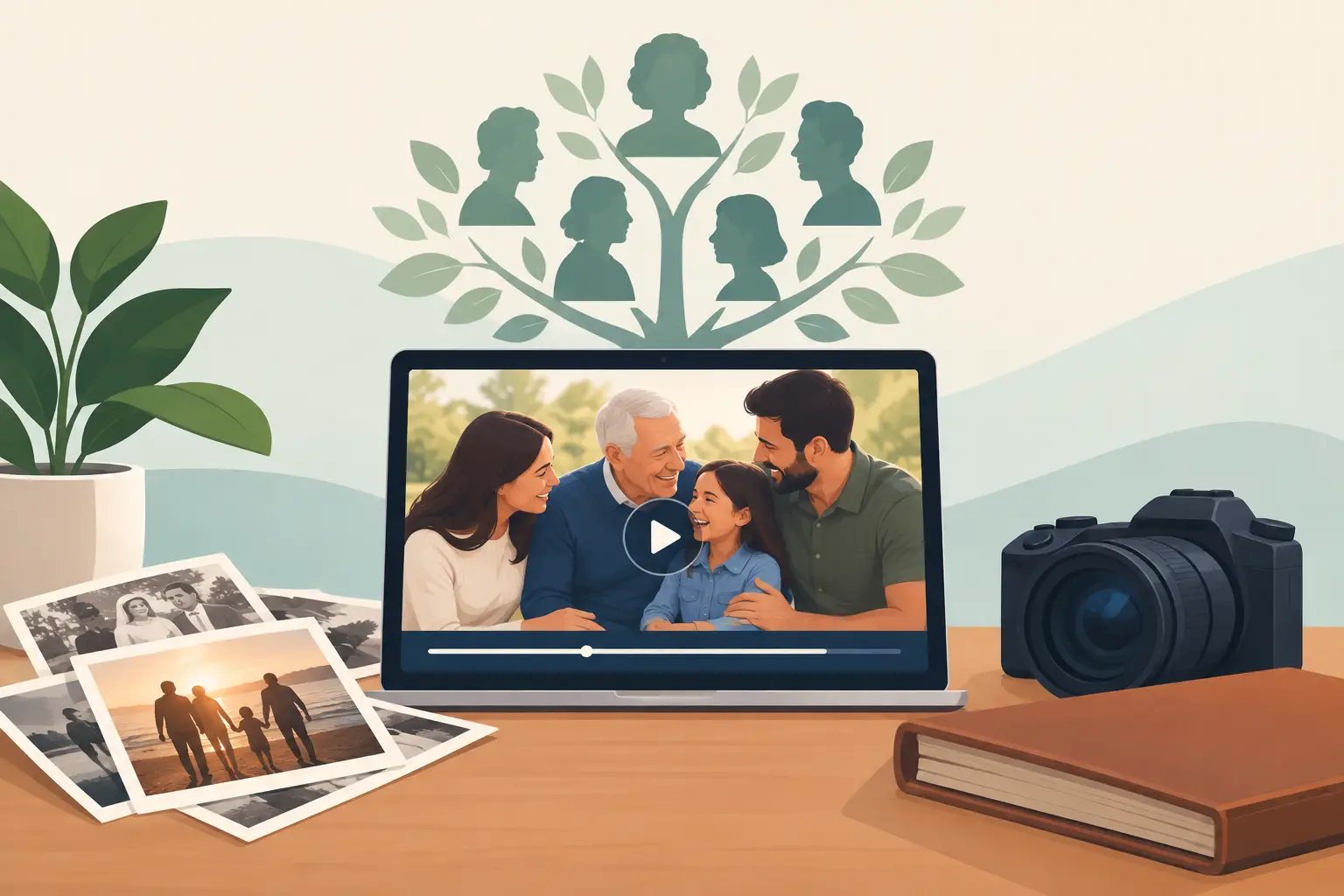
A child may remember the sound of your laugh long after they forget the details of a holiday. A grandchild may one day want to know how you met their grandfather, what your first home looked like, or what you hoped for the family. A family legacy video gives those memories a voice, a face, and a moment of direct connection.
It does not need to be a polished documentary. The most meaningful videos are often simple: one person, speaking honestly, with enough care to make sure the message reaches the right people at the right time.
Why a Family Legacy Video Matters
Photos preserve an instant. Video preserves presence. The pauses between words, the way someone tells a familiar story, and the expression on their face can carry meaning that a caption cannot hold.
A family legacy video can also say what gets postponed in everyday life. Parents can offer encouragement for a future birthday or graduation. Grandparents can share family history before details become harder to recall. A spouse can create a message for an anniversary years from now. Adult children can record questions and memories for future generations of their own.
The value is not limited to major life events. A short video about what you learned from your parents, why you chose a particular career, or what you admire about a loved one can become a lasting part of a family's shared story.
Still, recording the video is only part of the commitment. A file sitting on an old phone, external drive, or crowded cloud folder can be difficult for loved ones to find. A legacy message is more meaningful when it has a clear recipient and a planned time for delivery.
Start With One Clear Purpose
Before pressing record, decide what you want this video to do. Trying to tell your entire life story in one sitting can make the message feel overwhelming. One focused purpose makes it easier to speak naturally and helps the recipient understand why you made it.
You might create a video for a child to watch on their 18th birthday, a message to family members for a future holiday, or a record of stories you want your grandchildren to know. You may also make a video for your future self, capturing this season of life before it changes.
Ask yourself two questions: Who is this for, and what do I want them to feel after watching it? Your answer might be reassurance, belonging, gratitude, perspective, or simply closeness. That answer will guide what you say.
A single video can have more than one recipient, but it helps to consider whether the message is truly meant for everyone. A story about family history may be right for several relatives. A private note of encouragement may be better delivered only to one person.
What to Say in Your Family Legacy Video
You do not need a script, but a few notes can prevent the camera from making you forget the things that matter most. Begin with context. Say your name, the date, and who the message is for. Future viewers will appreciate those details, especially as years pass.
Then choose a few stories or thoughts that reflect who you are and what you hope to pass along. If you are unsure where to begin, consider these prompts:
- What is a family story you never want forgotten?
- What did your own parents or grandparents teach you?
- What challenge changed the way you see life?
- What do you admire about the person receiving this video?
- What do you hope they remember when life feels difficult?
Specific details make a message more personal. Instead of saying, “Family is important,” describe the Sunday dinners, road trips, recipes, sayings, or small acts of kindness that made your family feel like home. Instead of offering broad advice, share the moment that taught you why that advice matters.
It is also okay to leave room for emotion. You do not need to sound perfect or composed. A genuine pause, a laugh, or tears can show the recipient how deeply the message was meant. If a topic feels too difficult to say in one recording, make several shorter videos. A collection of brief messages can be easier to create and just as meaningful to receive.
Record Simply and Clearly
The best equipment is often the phone already in your hand. What matters most is that loved ones can see and hear you clearly. Choose a quiet room, face a window or soft lamp, and place the camera at eye level if possible. Avoid sitting with a bright window directly behind you, which can leave your face in shadow.
Set your phone on a stable surface or tripod rather than holding it. This creates a calmer viewing experience and lets you focus on the message instead of the screen. Record a short test first to check the sound. Background noise from a television, air conditioner, or busy kitchen can make heartfelt words harder to hear later.
Keep your language conversational. Imagine the recipient sitting across from you. You do not need to memorize every sentence, and you do not need to start over because you stumble on a word. Often, those natural moments make the video feel more like a real conversation.
For a longer story, record in short sections. You might make one video about childhood, another about meeting your partner, and another for each child or grandchild. Shorter recordings are easier to revisit, and they give you permission to return to the project over time.
Give the Message a Meaningful Delivery Date
A legacy video becomes more intentional when it is connected to a future moment. The date can be joyful, such as a birthday, wedding anniversary, graduation, or new baby's arrival. It can also be a quieter date, like the first day of a new year or a time when you want someone to hear your encouragement.
The right timing depends on the message. A video for a young child may be most meaningful when they are old enough to understand it. A note for a spouse may belong on a future anniversary. A message to your future self might be scheduled for five or ten years from now, when you can reflect on what changed and what stayed true.
Think through the delivery with care. Confirm the recipient's email address, let them know how they can verify their connection if needed, and choose people you trust. If the message is for several family members, make sure each person is someone you genuinely want included. Thoughtful recipient management protects both the privacy of the message and the meaning behind it.
MyTimeDrop helps turn this intention into a clear action. You can create a digital time capsule with video and written messages, choose a future delivery date, and securely send it to your future self or verified family recipients. Rather than leaving an important recording to be discovered by chance, you decide when it arrives.
Protect the Message Without Overcomplicating It
Family legacy videos often contain personal stories, names, memories, and feelings that are not meant for public sharing. Keep the recording in a secure account, use a strong unique password, and review recipient details before scheduling delivery.
It is wise to avoid recording highly sensitive information such as account passwords, financial access details, or anything that could put someone at risk if viewed by the wrong person. A legacy video is a place for connection and guidance, not a substitute for legal documents or secure estate planning records.
You can revisit your plan as life changes. Families grow, email addresses change, and relationships shift. Updating recipients or creating a new message does not weaken the original gesture. It shows continued care.
Make the First Recording Today
Do not wait for the perfect lighting, the perfect script, or a major milestone. Start with one story that your family may not know, one lesson you want someone to carry with them, or one simple sentence of love and encouragement.
Years from now, the people who receive it will not be judging your production skills. They will be grateful that you took the time to speak directly to them - and that you made sure your voice could find them when it mattered.